
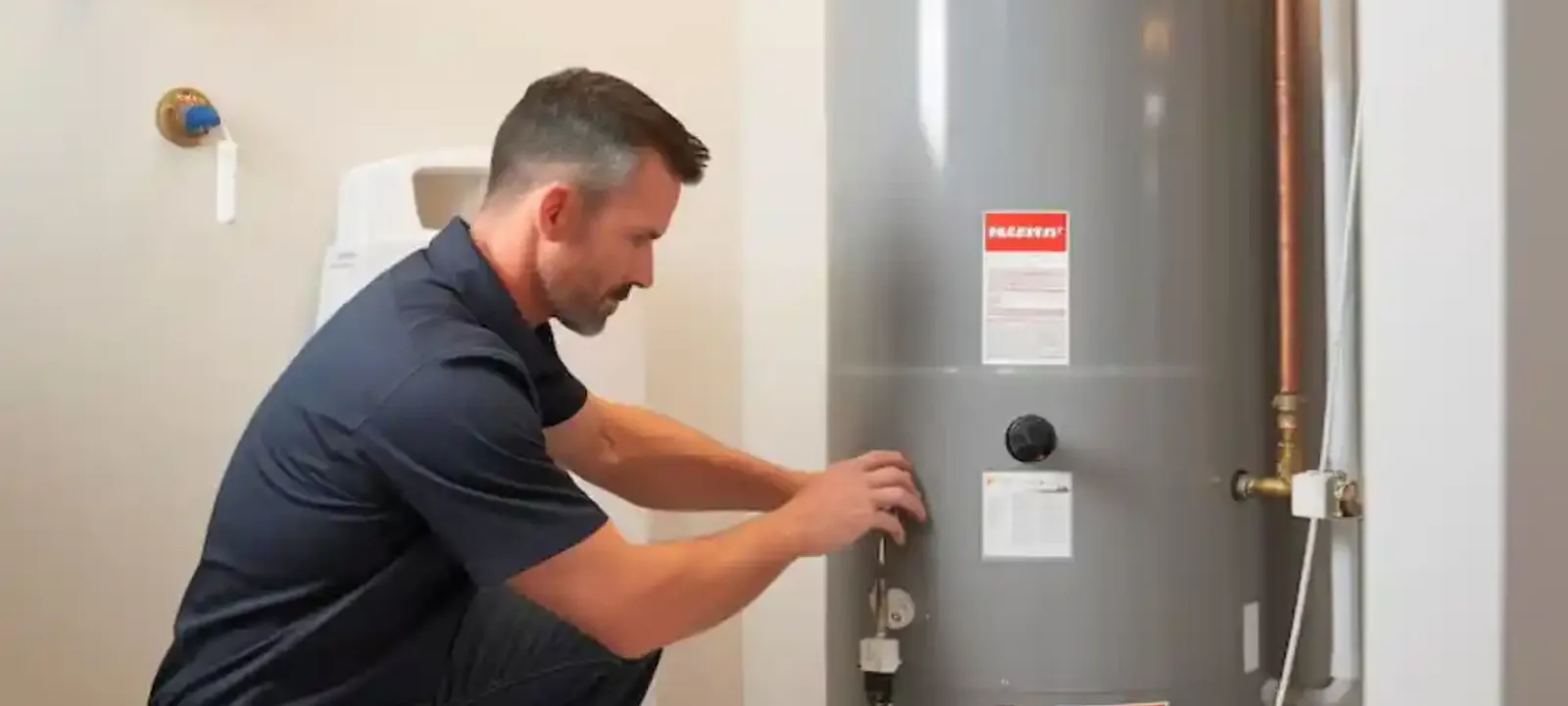
Cold shower or wet floor: act first, then call
A water heater problem usually shows up at the worst time, like a cold shower at 6 a.m. or water spreading across a utility closet floor. We answer 24/7, and same-day appointments are available when the schedule allows. Here is what you can do while you wait for a technician.
If the tank is leaking, do this now
Close the cold water shutoff valve on the pipe feeding the top of the tank. Then turn off the power at the breaker for an electric unit, or turn the gas control knob to off or pilot on a gas unit. Move anything stored on the floor nearby. If you smell gas, leave the home and call the gas utility or 911 before you call us.
A small drip from the relief valve pipe is different from a puddle under the tank. Take a photo of the leak spot and note the tank's age from the label. That helps the technician decide between a repair and a swap before arriving.
Water on the floor or no hot water? Call (609) 547-1417 and tell dispatch what you see.
Signs your water heater needs repair
- No hot water at allOn an electric unit this often points to a tripped breaker, a failed upper element or a bad thermostat. On gas it often means the pilot or thermocouple.
- Lukewarm water that runs out fastA burnt lower element or a heavy layer of sediment cuts the usable hot water in the tank.
- Popping or rumbling noisesSediment at the bottom traps steam bubbles that burst as the burner or element heats.
- Rusty or brown hot waterIron in the supply, a corroded anode rod or a failing tank lining. Cold water that is also brown points to the supply, not the heater.
- Water around the baseCould be a loose fitting, a leaking relief valve or a tank that has rusted through. Only the first two are repairable.
- Pilot light that keeps going outDraft, a dirty pilot assembly or a worn thermocouple on a gas heater.
Hot water that smells like sulfur or rotten eggs is usually a reaction in the tank, often fixed by replacing the anode rod and flushing. Tell the dispatcher about any smell so they can send the right parts.
Standards behind tank heaters
Gas storage water heaters are built to ANSI Z21.10.1, and the temperature and pressure relief valve is a safety part rated under ANSI Z21.22. Replacement and re-piping work falls under New Jersey's Uniform Construction Code plumbing subcode (N.J.A.C. 5:23-3.15).
What Manchester Township water does to a tank
Both municipal systems run by the Manchester Township Water Utility are moderately soft to soft, at roughly 3 to 6 grains per gallon. That means hard scale is mild here. Sediment still settles in the bottom of the tank over years, so a yearly flush is worth doing if the heater is past its early life.
In parts of the western system around Whiting, 2025 testing showed iron up to about 1 part per million, above the 0.3 recommended limit for staining. Iron feeds sediment and can color hot water. If your hot water looks rusty but cold does not, ask the technician to check the anode rod and drain a bucket from the tank.
About half the homes in the township were built before 1980, and many tanks sit in basements, garages or tight utility closets in places like Crestwood Village and Leisure Village West. Limited space can force a repair to be done in an awkward spot. Clear a path to the heater before the visit and it saves time on the clock.
Repair or replace: a quick decision table
| Situation | Usually repair | Usually replace |
|---|---|---|
| No heat, tank dry and sound | Yes, new element, thermostat or thermocouple | Only if the tank is very old |
| Leak at a fitting or relief valve | Yes | Only if tank is also corroded |
| Leak from the tank body | No | Yes, a rusted shell cannot be patched |
| Rusty hot water only | Sometimes, anode rod and flush | If the tank lining is failing |
| Frequent repairs on an older tank | Short term only | Often the better value |
A technician can confirm this on site. You hear the price before work starts.
If the answer is replacement, our water heater replacement service covers sizing and swap-out. Planned upgrades go through water heater installation.
What changes the price of a repair
- Part that failedA thermostat or element costs less than a gas valve or a control board.
- Gas or electricThe parts and the labor steps differ, and gas work includes a safety check of the burner and venting.
- Tank age and conditionSpending on an old tank with a rusty lining can be wasted money, so a technician may advise against it.
- AccessTight closets, low ceilings and stairs add time.
- Time of callAfter-hours dispatch for a leak can cost more than a daytime appointment. You hear the price first.
What happens during a repair visit
- Describe it on the phoneTell dispatch the age, fuel type and what you see or hear.
- Safe shutoff and inspectionThe technician checks power or gas, the relief valve, fittings and signs of leaks.
- Test the failed partElements, thermostats and thermocouples are tested before anything is replaced.
- Price before workYou get a clear price, then the repair, then a test for hot water and leaks.
Gas fitting work is done as the law requires, and permits and inspections go through the municipal construction office when a job calls for them.
Ready to book a repair visit? Call (609) 547-1417 any hour.
Frequently asked questions
Yes. Dispatch is open 24/7, including nights, weekends and holidays. If the tank is leaking, shut off the cold water supply and the power or gas first, then call (609) 547-1417. Same-day appointments are available when the schedule allows, and you hear a clear price before work starts.
On electric units, check the breaker and the reset button on the thermostat. On gas units, check whether the pilot is lit. If those are fine, an element, thermostat or thermocouple has likely failed.
No. Shut off the water to it and the power or gas. A leak can get worse without warning and can damage floors and stored items.
Leave the home at once and call the gas utility or 911 from outside. Do not flip switches or use a phone inside. Call us once the utility says it is safe.
If water seeps from the tank body, it cannot be patched. Fittings, valves and the anode rod are repairable.
Once a year is a common rule, and the soft water here keeps scale mild. A flush clears sediment that causes popping noises and slow heating.
Sediment, a dead lower element or a too-small tank can all shorten the supply. The technician can tell which during the visit.