
No heat in cold weather: what to check first
A boiler that stops in January is a real problem, especially with older family members at home. Before you call, run through a short checklist. Many service calls start with a simple cause.
- Make sure the thermostat is set to heat and above room temperature.
- Check that the boiler power switch and breaker are on.
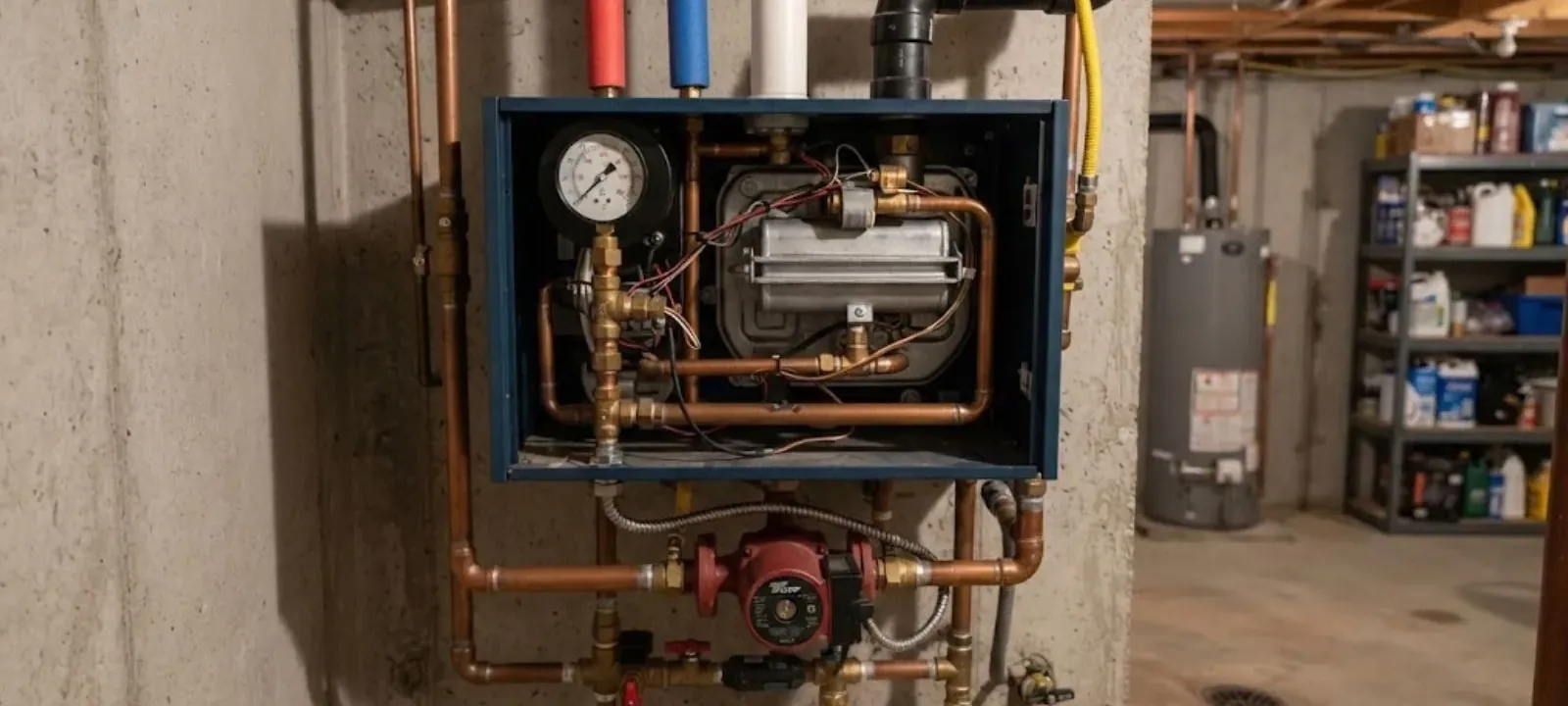
- Look at the pressure gauge. Low pressure often points to a leak or a failed fill valve.
- Check the oil tank level or confirm that gas service is on.
- Look for water around the boiler or on nearby floors.
Gas or oil smells
If you smell gas, leave the home and call the gas utility or 911 first. For a smoke or fuel odor, ventilate and stop using the boiler until it has been checked.
Boiler off and the house cooling down? Call (609) 547-1417 and describe what the gauges show.
Common boiler problems
- Short cyclingThe boiler turns on and off in quick bursts. Causes include an oversized unit, bad controls, low water or a clogged heat exchanger.
- Banging or kettlingMineral buildup or trapped air makes the water boil in pockets.
- Leaks at the boiler or pipesPressure relief valve, circulator flange or a failing heat exchanger.
- Radiators cold at the topTrapped air needs bleeding. If it keeps coming back, a leak is adding air.
- Pilot or burner will not lightIgnition parts, a dirty burner or a gas valve.
- Rising or dropping pressureA failed expansion tank or a failed fill valve.
Standards behind heating boilers
Residential heating boilers are built to the ASME Boiler and Pressure Vessel Code, Section IV, and boiler replacements in New Jersey fall under New Jersey's Uniform Construction Code plumbing subcode (N.J.A.C. 5:23-3.15) along with other trades' rules. Gas smell means leave and call 911 or the gas utility first.
Repair or replace a boiler
| Situation | Repair makes sense | Replacement makes sense |
|---|---|---|
| Failed circulator or zone valve | Yes | No |
| Ignition or thermostat issue | Yes | No |
| Cracked heat exchanger | Rarely | Yes, usually |
| Frequent repairs on a very old boiler | Short term | Likely better value |
| Leaking from the body of the boiler | Sometimes, depends on source | If it is the vessel itself |
A technician checks the source before advising.
Not every plumber does every kind of heating work, and we do not claim gas-fitting or HVAC credentials on this page. Call (609) 547-1417 and describe the system, and we will tell you whether we can handle the job.
What to expect on a visit
- Call and describeFuel type, age, brand and what the controls or gauges show.
- Inspect the systemThe technician checks pressure, controls, circulators and visible leaks.
- Find the failed partTesting separates a thermostat, a pump or a valve from a deeper fault.
- Clear price, then repairYou hear the price first, and then the repair and a heat test follow.
Older homes and boiler piping
About half of Manchester Township homes were built before 1980, so some heating loops and valves are decades old. Old zone valves and circulators fail more often, and old fittings can leak when the system is cycled hard in the first cold snap.
If your boiler also supplies domestic hot water, a failure can leave you without heat and hot water at once. Tell dispatch so the visit covers both. Water here is soft to moderately soft, at about 3 to 6 grains per gallon, so scale in the loop is mild, but iron in parts of the western system can still settle in small passages.
Factors that change a boiler repair price
- Part that failedThermostats and circulators cost less than gas valves or heat exchangers.
- Fuel typeOil and gas boilers have different parts and tests.
- Age and parts supplyOlder boilers can need hard-to-find parts.
- AccessBasement stairs, tight spaces and long runs add time.
- Time of dayA cold-night emergency visit can cost more than a daytime booking, and you hear the price first.
If the problem is hot water only, see water heater repair. A hidden leak under a floor may need leak detection.
Frequently asked questions
Short cycling comes from low water, bad controls, a dirty heat exchanger or a boiler that is too large for the loop.
Many residential boilers sit around 12 to 15 psi when cold, but check the maker's label. Big swings point to a leak or an expansion tank problem.
Air is trapped. Bleeding the radiator can help, but repeated air points to a leak or a pump issue.
Water on the floor from a boiler should be treated seriously. Shut off the water feed and power, and call.
Call (609) 547-1417 and describe the system. We will tell you whether we can handle it.
A cracked heat exchanger, repeated failures or very old age often tip the choice toward replacement.
Yes. A yearly check before cold weather catches worn parts early.