
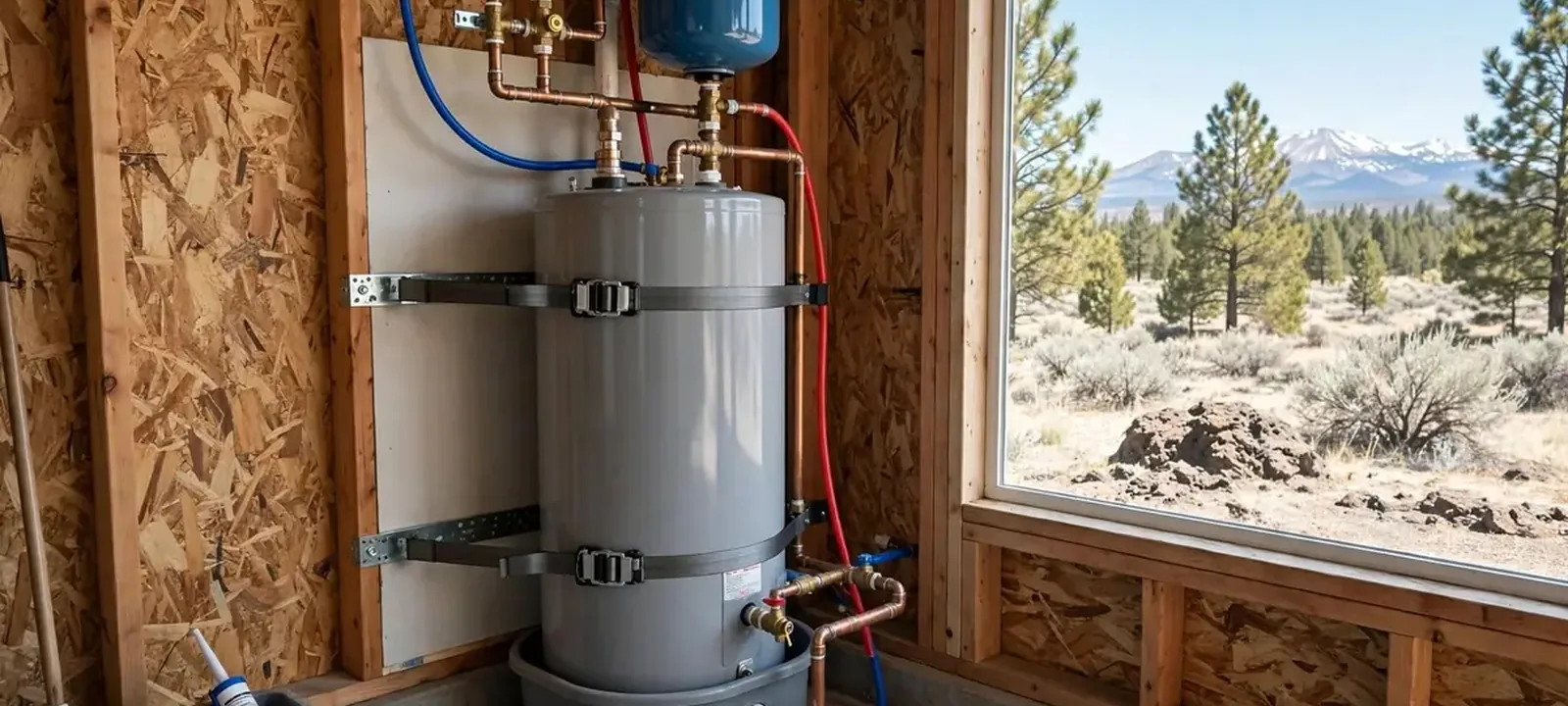
Installation versus swap-out
A swap-out replaces one tank with a similar one in the same place. An installation covers the bigger jobs, like a new location, a fuel change, a bigger tank or a new home. The extra planning is mainly about venting, piping and the electric or gas supply.
Most planned installs start with a short phone call. You tell us the current fuel, tank size and location, and what you want to change. We then book a visit, look at the space, and give a clear price before any work begins.
If your heater already failed, see water heater replacement. If you are considering on-demand hot water, our tankless water heater page covers that route.
Gas or electric: how to choose
| Factor | Gas | Electric |
|---|---|---|
| Recovery speed | Faster, reheats quickly | Slower, but fine for most households |
| Needs a vent | Yes, flue to the outside | No |
| Needs gas piping | Yes | No |
| Needs a dedicated circuit | No | Yes, sized to the unit |
| Fits when | Gas is already in the home | Venting is hard or gas is unavailable |
A technician checks the panel, venting and gas supply before recommending one.
Get ready before the installer arrives
Clear a path
Move boxes and stored items from the stairs, the closet door and the area around the unit.
Note the old label
Capacity, fuel type and model on the current heater help match the new one.
Check the panel
Know where the breaker panel is and whether there is a spare slot for electric units.
Plan for water shutoff
Hot and cold will be off for a few hours, so schedule laundry and showers around it.
Think about future needs
A new bathroom, a bigger tub or a larger household changes the size you should buy.
What a proper installation includes
- A tank sized to the household and its fixtures.
- A new relief valve with a discharge pipe run to a safe spot.
- New shutoff valves and flexible connectors where needed.
- An expansion tank where the system calls for one.
- On gas units, a vent check and a gas leak test.
- A drain pan where a leak could damage finished space.
Permits and inspections for water heater installs go through the municipal construction office under the Uniform Construction Code. We will tell you what applies to your job before work begins.
Planning an install? Call (609) 547-1417 to set a time and hear the price first.
Installing in Manchester Township homes
With a median build year around 1979 and about half of homes built before 1980, many installations here involve updating old valves, adding a pan or rerouting a vent. Fixing these at install time prevents a callback in a few years.
Active-adult communities such as Crestwood Village, Pine Ridge at Crestwood and Leisure Village West often use utility closets. Closets limit tank height and clearance, so measure the space before you pick a taller high-capacity model.
The municipal water here is soft to moderately soft, roughly 3 to 6 grains per gallon. Mild scale means a standard tank works well. If you are on a private well, ask for a water test, because iron and minerals change the equipment you should choose.
What affects an installation price
- Tank type and sizeBigger and higher-efficiency tanks cost more.
- Venting and gas pipingChanging fuel or moving the heater adds vent and pipe work.
- Electrical workA new circuit or panel upgrade is a separate cost on electric units.
- LocationMoving a heater from the basement to a closet or garage means more piping.
- Code and permitsExpansion tanks, discharge pipes and permit fees vary by job.
Frequently asked questions
Replacement swaps a failed unit like for like. Installation covers new locations, fuel changes and bigger setups.
Often yes. It depends on venting, access to water lines and the gas or electric supply.
Many jobs do. Permits and inspections go through the municipal construction office, and we tell you what applies.
No. A tank that is too large wastes energy. Pick a size that matches your household and your longest hot water use.
If your system has a closed loop, such as a backflow device or a pressure regulator, one is often needed.
Same-day appointments are available when the schedule allows. Call (609) 547-1417 and ask.
If the old tank is more than a decade old and rusting, planning ahead avoids an emergency.