
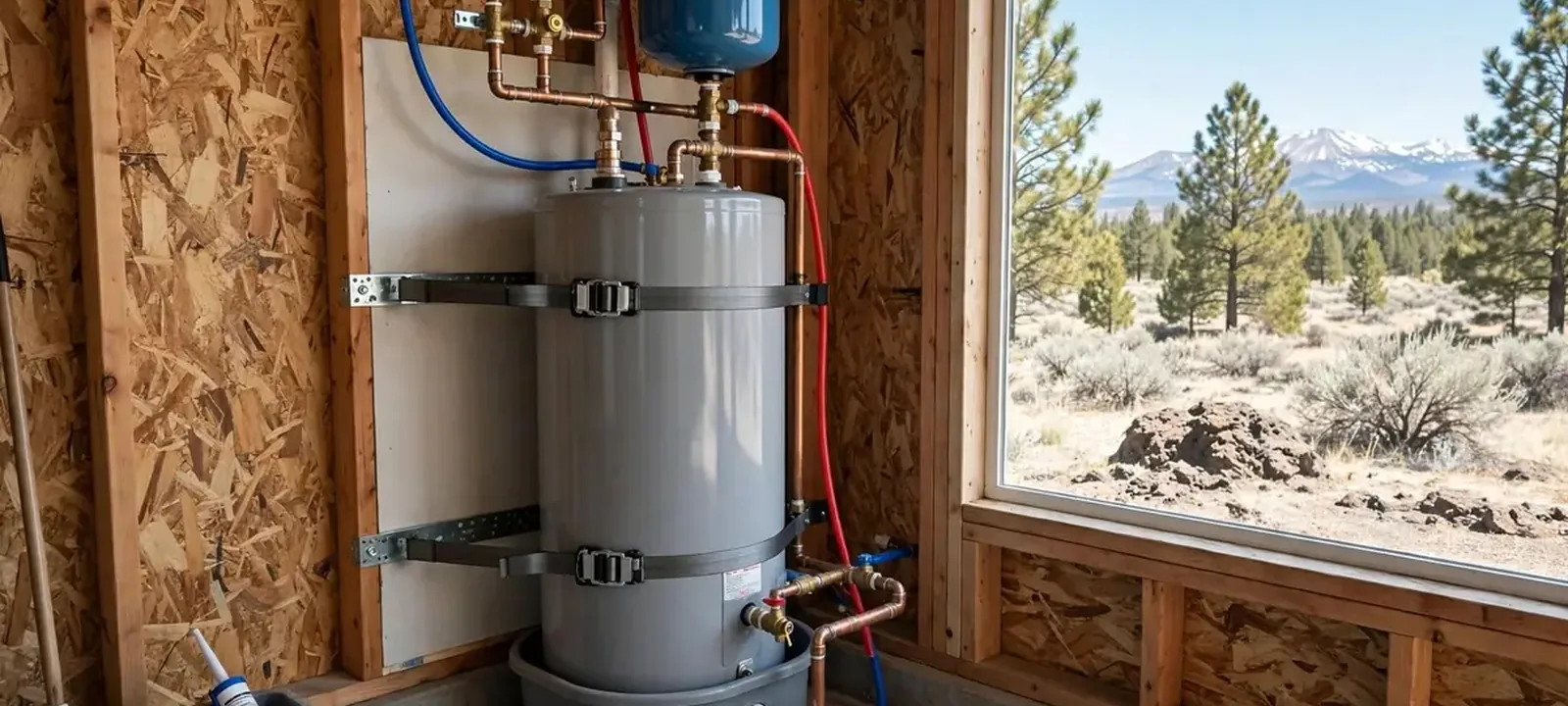
What a proper install includes
A tank water heater install is more than setting a new tank where the old one stood. It includes the water connections, a temperature and pressure relief valve with a discharge pipe, venting for gas units, correct wiring for electric units, and a drain pan where leaks could damage floors.
Done right, it takes a few hours. Done carelessly, it can leak, vent poorly or fail an inspection. Read this guide first, then ask your plumber to confirm each item. Our water heater installation team handles all of these steps.
Choose your size and fuel
Fuel and size are the two biggest choices. Gas heaters recover hot water faster and keep working in many power outages if the pilot design allows it. Electric heaters are simpler to vent and often easier to place.
| Household | Typical tank size | Notes |
|---|---|---|
| 1 to 2 people | 30 to 40 gallons | Small baths, lighter use |
| 3 to 4 people | 40 to 50 gallons | Most common choice |
| 5 or more people | 50 to 80 gallons | Large family or heavy use |
| Large soaking tub | Higher recovery rating | Look at first-hour rating, not just gallons |
These are common ranges, not rules. Ask for the first-hour rating, which shows how much hot water the unit delivers in a busy hour.
If you want endless hot water and are willing to pay more up front, ask about a tankless water heater instead. For a standard tank, spend your attention on size, venting and the expansion tank.
The install, step by step
- Shut off and drainWater, gas or power is turned off. The old tank is drained to a floor drain or outdoors.
- Disconnect and removeSupply lines, vent and fuel connections are detached, and the old tank is taken out.
- Set the new tankThe heater goes on a level base or drain pan, with clearance around it.
- Connect water linesNew flexible connectors, shutoff valves and a relief valve with a proper discharge pipe go in.
- Connect fuel and ventGas lines are tested for leaks, and flue pipe is sloped and sealed. Electric units are wired to a correctly rated circuit.
- Fill, purge and testAir is purged from the lines, the thermostat is set, and the first heat cycle is watched.
Gas and carbon monoxide
A gas water heater needs working venting. If the flue is loose, blocked or sloped wrong, exhaust can enter the house. Install a carbon monoxide alarm near bedrooms, and never ignore soot, scorch marks or a pilot that keeps blowing out.
What you can prepare, and what is for the pro
Homeowner tasks
- Clear a path and a few feet of space around the old tank
- Take a photo of the rating label and the existing venting
- Decide on size and fuel with your household in mind
- Know where the main water shutoff is and that it turns
Leave these to the plumber
- Gas line connections and leak testing
- Flue and vent work
- Wiring on electric units
- Relief valve, expansion tank and discharge piping
If your old heater has failed and the choice is repair or replace, see how our water heater replacement service handles the swap day.
Planning an install? Call and share the size, fuel and location. You hear a clear price before work starts.
Permits, expansion tanks and other extras
In New Jersey, plumbing permits and inspections go through the municipal construction office under the Uniform Construction Code. Ask your installer how permits and inspections are handled for a water heater in your town, and keep any paperwork for a future home sale.
An expansion tank gives heated water somewhere to go in a closed system. Many homes need one, and ignoring it can stress the relief valve. A drain pan with a pipe to a safe spot protects the floor if the tank leaks later.
New flex connectors and fresh shutoff valves cost little compared with the tank itself. Reusing old ones is how small drips become future leaks.
Manchester Township notes
Water from the Manchester Township Water Utility is moderately soft to soft, about 3 to 6 grains per gallon according to 2025 data. Scale builds slowly in a tank, but sediment still collects, so plan a yearly flush on the new unit. Whiting's western system measured higher iron in places, which is worth considering if you see orange staining or sediment in the tank water.
Homes in the township have a median build year around 1979. In a house that age, the old heater may sit in a closet sized for a smaller tank, with venting that has aged. Measure the space and check the flue before you buy a bigger unit, since a taller or wider tank may not fit without changes.
Active-adult communities such as Crestwood Village and Leisure Village West include compact utility closets and slab homes. If your heater sits in a closet, tell the plumber the door width, since a 40 or 50 gallon tank has to come out whole. That small detail saves time on the day.
We also install for homeowners in Toms River and Lakewood, so the same size and venting questions come up there.
A final checklist before you sign off
- Tank size and first-hour rating match your household
- Relief valve has a discharge pipe pointed to a safe spot
- Expansion tank is installed where needed
- Gas lines have been leak tested, and the flue slopes correctly
- Drain pan is in place and the thermostat is set to a safe temperature
- Paperwork and permit details are handled
Keep the manual and the date of installation. A yearly flush and a quick look at the anode rod, when the model allows, extend the life of the tank.
Frequently asked questions
A like-for-like swap often takes a few hours. Fuel changes, venting rework and extra piping take longer.
Most households of three to four people use a 40 to 50 gallon tank. Check the first-hour rating for heavy use.
Many closed systems need one. Ask your plumber whether your home has a check valve or pressure reducing valve that calls for it.
Plumbing permits and inspections go through the municipal construction office under the Uniform Construction Code. Ask your installer and the township office what applies.
Many makers suggest flushing once a year. Sediment collects even in moderately soft water, so it still helps.
Not always. Older homes often have closets sized for smaller tanks, and the flue may limit height. Measure first and share the numbers when you call.
Yes, but it adds scope: a gas line, venting and a permit. Ask for a clear price covering all of it before work starts.