
The plain-English answer
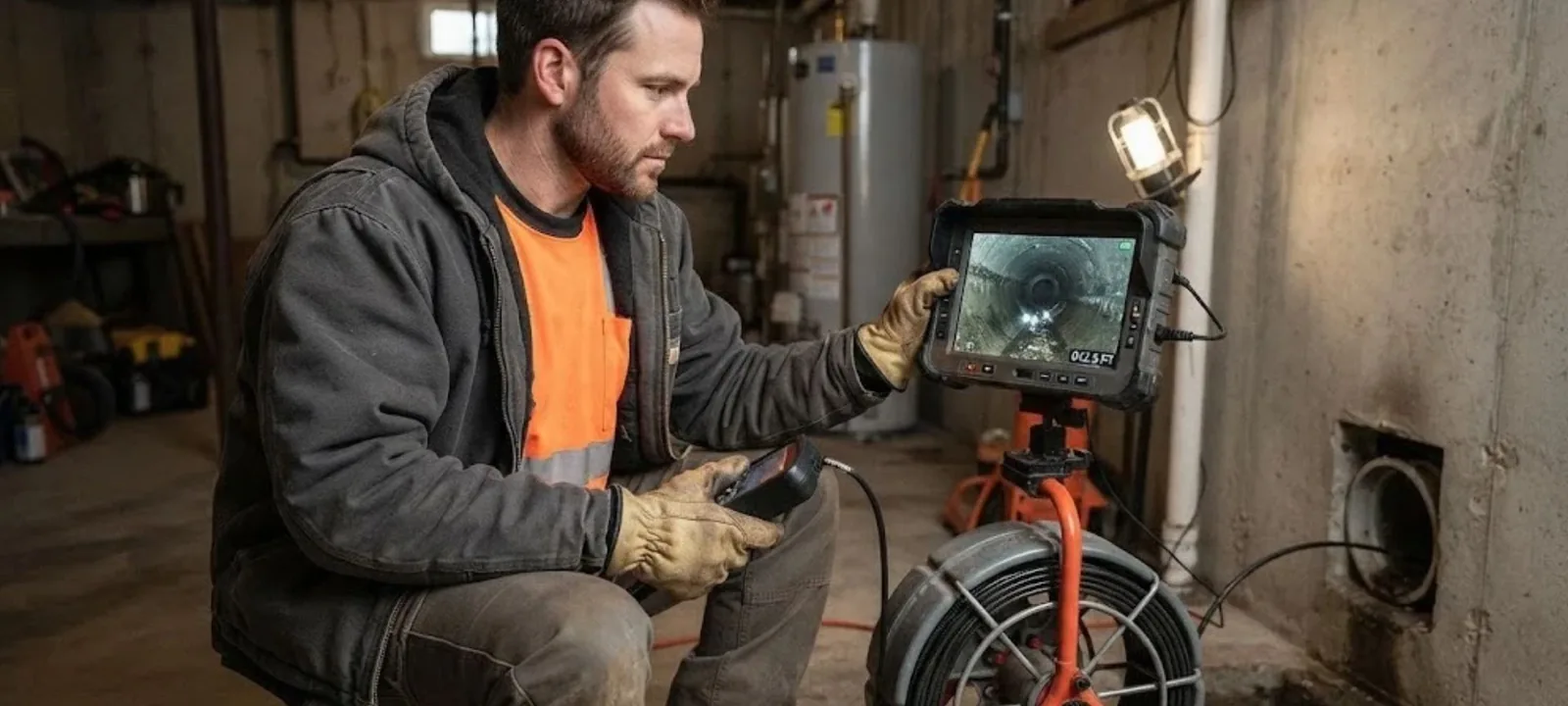
A sewer scope inspection uses a waterproof camera on a flexible cable. The plumber feeds it into the home's sewer line through a cleanout, and a monitor shows what the camera sees. The line is recorded from start to finish, so you can see cracks, roots, sags and blockages with your own eyes.
Home buyers order it during the inspection period because a damaged sewer line can be expensive to fix and is invisible from the surface. A standard home inspection covers fixtures and visible pipes, but it does not usually show what is underground.
To book one, see our sewer inspection service or call (609) 547-1417. Dispatch is open 24/7, and the price is given before work starts.
If you are buying a home
Put the scope in your contract timeline. Ask your agent for the inspection deadline, then book the camera well before it. The seller usually has to allow access to the cleanout, so request that early.
- Ask whether the home is on public sewer or on a septic system.
- Find the cleanout location, or have the plumber find it on arrival.
- Book the scope within the inspection window, with time left to negotiate.
- Ask for the recording and a plain written summary of what was found.
- Use any findings to ask for repair, a credit or a lower price.
A clean scope is useful too. It tells you the pipe is in good shape on the day you checked, which supports your offer and your budget for years of ownership.
What the camera can reveal
- Tree rootsFine roots entering at joints are common and can often be cleared, but they may return.
- Cracks or breaksFractured pipe lets soil in and sewage out, and may need repair.
- Belly or sagA low spot holds water and waste, and can cause repeated clogs.
- Offset jointsPipes that have shifted apart catch debris and snag cables.
- Scale or greaseHeavy buildup narrows the pipe and invites backups.
- Pipe materialThe picture can show whether the line is plastic, cast iron or clay.
Cameras do not fix anything. They find the problem so you can choose the right fix, whether that is cleaning, lining, spot repair or a longer replacement.
Scope versus other checks
| Check | What it shows | Good for |
|---|---|---|
| Sewer scope | The inside of the pipe on camera | Buyers and anyone with repeated backups |
| Drain cleaning | Clears a blockage | A single clog |
| Water pressure test | How strong the supply is | Low flow, not drains |
| Septic tank inspection | Tank and drain field condition | Homes on septic |
| Leak detection | Hidden water supply leaks | Unexplained high bills or wet spots |
A scope looks at waste lines. Supply leaks and septic tanks need different tools.
What to do before the plumber arrives
- Clear a path to the cleanout, which is often in the basement, crawl space or a yard box.
- Skip heavy laundry and long showers for an hour or two before the visit, so the line is quiet.
- Note any past backups, slow drains or gurgling sounds and tell the plumber.
- If you are a buyer, ask the seller for any repair or pumping history on the line.
- Make sure the lowest drain is reachable if there is no outside cleanout.
A plumber can often find the cleanout quickly, but a hidden or buried one adds time. When no cleanout exists, the camera may enter through a toilet flange or a roof vent, which takes more care and a pull of the fixture. Ask in advance if that could apply to your house.
When a scope finds a problem
Mild findings, such as a bit of scale or small roots, often call for cleaning. A plumber may use a cable or sewer line cleaning to restore flow. More serious findings, like a broken or sagging pipe, lead to sewer line repair of the damaged section.
Ask the plumber to mark where on the recording each problem appears and roughly how far from the cleanout. That detail lets a second plumber give a comparable price. If the findings are confusing, a second opinion costs little compared with the repair.
Do not flush a suspected blockage
If drains gurgle or sewage backs up in a tub or floor drain, stop using water. Extra flushing pushes more waste into the house. Call (609) 547-1417 and describe what you see.
Sewer or septic? Why Manchester Township buyers should ask first
Parts of Manchester Township are on public sewer and parts are on septic, so the first question is which one a particular house uses. A sewer scope only applies to a house connected to a sewer line. For a septic home, a tank and drain field inspection is the right check instead.
Housing age matters too. The township's median home was built in 1979 and about 52 percent of its homes predate 1980. In that age range, drain pipes may be plastic, cast iron or a mix, and joints from the original build are now decades old. A scope tells you which you have and whether the joints are holding.
The sandy Pinelands soil can shift under saturated ground, and roots reach into sewer lines wherever they find moisture. A lot with mature trees near the lateral deserves the closer look. Ask the plumber to record the whole run and note any spot where roots enter.
If you are buying in the active-adult communities, such as Crestwood Village or Leisure Village West, ask the seller or the association how sewer service is handled there. Ownership of the pipes can differ from a standard lot, and a scope should only cover pipes you are responsible for. For nearby areas, buyers in Lakewood or Toms River face the same sewer-versus-septic question.
Frequently asked questions
Most are done within an hour or so, depending on how easy the cleanout is to reach and how long the line is. Longer lines, bends and heavy buildup add time.
The camera can look at the pipe between the house and the tank, but the tank and drain field need a separate septic inspection. Ask what the plumber is actually checking.
Usually the buyer, as part of due diligence. The contract and your agent decide what happens if the scope finds a problem, such as a repair request or a credit.
No. A scope covers drains and sewer pipes. Supply leaks need leak detection, which uses sound, pressure and heat tools to find hidden water loss.
It is optional, but buyers often choose it because a hidden defect is costly. Owners can also use one after repeated clogs, slow drains or a basement backup.
Check the closing papers, the property record or ask the seller. The Manchester Township construction office or municipal utilities may also help. Do not guess, because it changes the inspection you need.