
Why one leak costs more than another
A dripping faucet and a leak inside a slab can both be called plumbing leaks, but they have little else in common. The cost depends on the time to find the leak, the effort to reach it and the work to restore whatever was opened. A trustworthy quote reflects those three stages.
This guide lists the factors that change a bill, so you can compare quotes and ask good questions. We do not print dollar figures here, because a number without seeing your pipe is a guess. Call (609) 547-1417 and you will hear a clear price before work starts.
The cost factors, one by one
- Where the leak isA visible leak under a sink is quick. A leak in a wall, ceiling or slab takes more time.
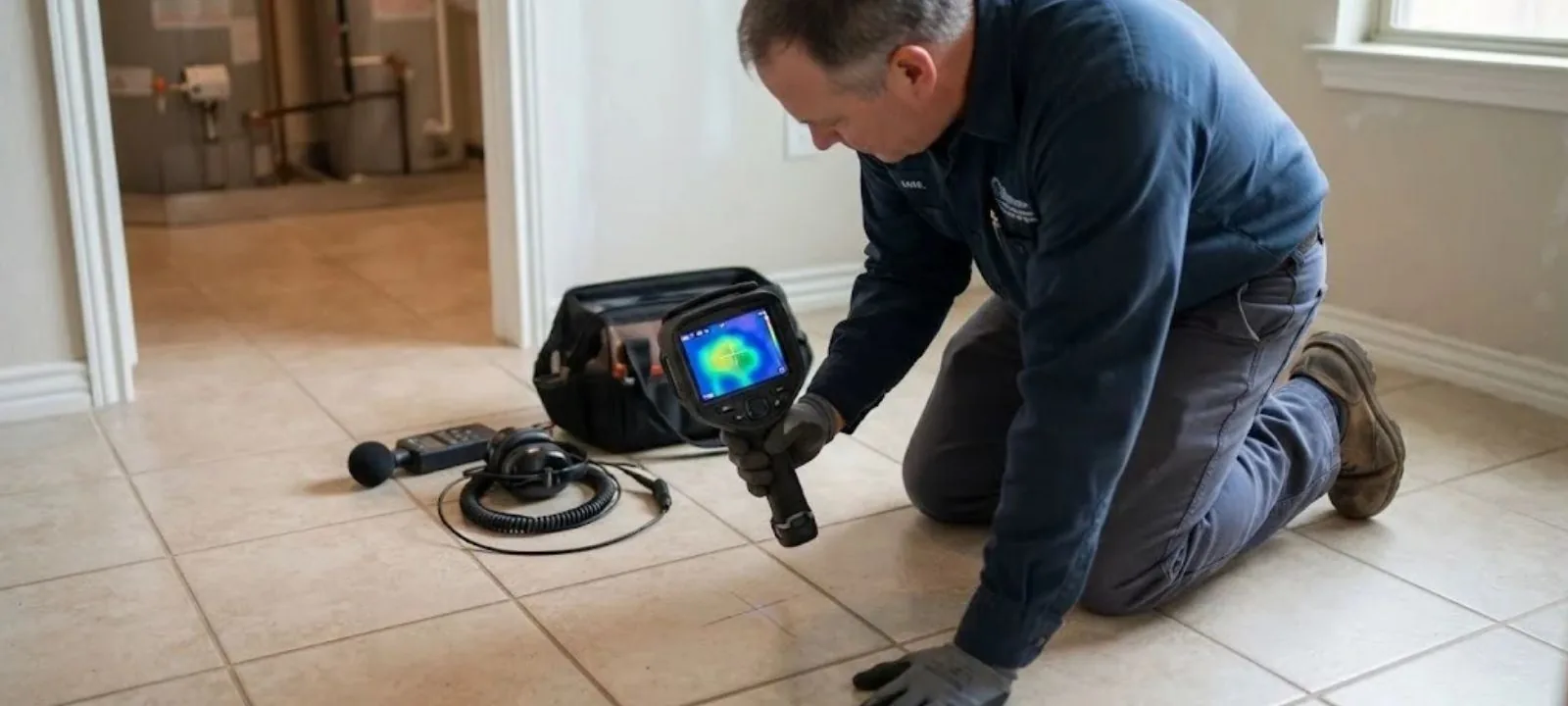
- Finding itHidden leaks may need listening gear, pressure testing or thermal imaging before anyone cuts.
- Pipe materialCopper, PEX, CPVC and galvanized steel are each repaired differently, and old steel may be failing in several places.
- AccessOpen basement or crawl space ceilings are easy. Finished walls and tile cost more to open and repair.
- Size and pressureLarger lines and main supply pipes involve more water and more careful shutoff.
- Emergency timingAfter-hours calls and active flooding change scheduling and labor.
- Water damageDrying, drywall and flooring are separate from the plumbing repair itself.
- PermitsSome repairs may need a permit and an inspection, depending on the work.
Notice that the pipe repair itself is often the smaller part. Finding the leak and restoring the walls are what drive large bills.
A number worth knowing
According to the EPA's WaterSense program, household leaks waste nearly 10,000 gallons of water a year in an average home. A small drip that seems cheap to ignore usually costs more in water and damage than in repair.
What the work looks like, from start to finish
- Shut off waterThe plumber closes the nearest valve or the main to stop the flow.
- Locate the leakVisible signs, moisture readings and tools narrow it to a spot.
- Open the areaOnly the needed section of wall, ceiling or floor is cut.
- Repair or replaceA short piece of pipe or a fitting is replaced, or a longer run if the pipe is failing.
- TestThe line is pressurized and watched for drops or weeping.
- Close upPatching and finish work follows, sometimes by another trade.
Ask who handles the patching at the end. Many plumbers repair the pipe and leave drywall and paint to you or a contractor, and that is worth knowing before you agree to the price.
Repair, reroute or replace: how the choice changes cost
| Situation | Likely approach | Why cost changes |
|---|---|---|
| One pinhole in a good pipe | Spot repair | Small parts, short job |
| Several leaks in old galvanized or copper | Replace a run | More material, but fewer repeat calls |
| Leak in a slab | Reroute above the slab or break the concrete | Concrete work and access drive cost |
| Leak at a fitting or valve | Replace the part | Quick if the shutoff works |
| Whole-house repeated failures | Repiping | Larger job, planned once |
A repeated pattern of leaks is the signal that spot repair may no longer be the better value.
Stop the damage first: what to do before the plumber arrives
- Shut off the main water valve and open a faucet to relieve pressure.
- Turn off the water heater if the leak is on the hot side or the tank is near flooding.
- Move furniture, rugs and electronics out of the wet area.
- Take photos and notes of the damage for your records or insurance.
- Do not walk on a sagging ceiling or touch outlets near wet floors.
Water and electricity do not mix
If water is near outlets, a panel or appliances, leave the area and shut off power from a dry spot, or call a professional. Dispatch at (609) 547-1417 is open 24/7.
For active flooding or a pipe that has split, our burst pipe repair service is the right call. For a slow, unexplained leak, leak detection finds the source before walls are cut.
Questions that make a quote easier to compare
- Is the price for finding the leak included, or only for the repair?
- Does it cover opening and closing the wall, or just the pipe work?
- What pipe and parts will be used, and how long should the repair hold?
- Is any permit or inspection needed, and who handles it?
- What happens to the price if the plumber finds a second leak?
Two quotes can look different when they actually cover different work. A lower number that leaves out detection or patching can end up costing more than a higher one that covers everything.
When repeated leaks point to a bigger problem
One leak is a repair. Three leaks in two years may be a pipe that is wearing out. At that point, patching costs more over time than replacing the failing run, and repiping can be priced against your repair history.
Keep a simple log of dates, locations and what was repaired. A plumber who sees that history can tell whether you have a bad fitting, a pressure problem or an aging pipe system.
Manchester Township: local factors in a leak quote
Age is the biggest local cost factor. Manchester's median home dates to 1979, and about 52 percent of homes were built before 1980. Pipes and fittings that old are more likely to fail in multiples, so ask a plumber to check nearby connections while the wall is open. That can save a second wall opening later.
Water quality is mild but not uniform. The Manchester Township Water Utility's 2025 reports show hardness around 3 to 6 grains per gallon in both systems, which is soft to moderately soft. Iron in the western system, around Whiting, reached about 1 ppm. Iron can stain fixtures and speed wear on valves, so mention staining when you describe the leak.
Repairs that open walls or change piping may need a permit. Permits and inspections go through the municipal construction office under the Uniform Construction Code. Ask the office if your repair qualifies, and ask your plumber who pulls any permit.
If your home sits near the Jackson or Lakehurst border, you may be tempted to call a plumber in Jackson or Lakehurst. Ask where the permit would be filed. The township where the house sits controls it, not where the plumber is based.
Frequently asked questions
Time, access, pipe material, parts and restoration all play a part. Ask for the price in writing before work starts, and ask what is included.
Policies differ. Some cover sudden water damage but not slow leaks or the pipe itself. Read your policy or call your agent, and document the damage with photos.
Often yes, because finding it takes extra time and opening the wall or floor adds work. Leak detection first usually reduces the amount of cutting.
A clamp or push fitting can hold it for a short time. It is a temporary measure, so have a plumber look at the pipe soon, since pinholes often signal wider wear.
It depends on what is being repaired. Ask the municipal construction office, which handles plumbing permits and inspections under the state's Uniform Construction Code.
Age adds risk. With a median build year of 1979, many homes have decades-old fittings, valves and supply lines. That does not mean yours will leak, but it is worth an inspection after repeated issues.