
The direct answer
A carbon monoxide detector senses carbon monoxide, also called CO. It does not sense natural gas or propane leaks. Natural gas is mostly methane, and propane is a different gas, and a standard CO alarm is not built to read either one.
That gap matters. A house can have a working CO alarm and still have a gas leak, because an unburned leak produces no carbon monoxide at all. If you smell gas, do not wait for an alarm.
If you smell gas, leave first
Get everyone outside right away. Do not flip switches, use a phone inside, light anything, or start a car in an attached garage. From outside, call 911 or your gas utility's emergency line. Do not go back in until you are told it is safe.
Two different hazards, two different alarms
| Alarm type | What it senses | What it does not sense |
|---|---|---|
| Carbon monoxide detector | Carbon monoxide from burning fuel | Unburned natural gas or propane |
| Combustible gas detector | Methane or propane in the air | Carbon monoxide, unless it is a combo unit |
| Smoke alarm | Smoke or heat | Any gas |
| Combo unit | Both gases, if labeled for both | Anything not on its label |
Check the label on any device to see which gases it covers.
A combustible gas detector is a separate product. Look at the packaging and make sure it names the gas you use. Natural gas rises, and propane sinks, so the mounting height changes with the fuel.
A smart habit is layers. Keep working CO alarms near sleeping areas and on each level, and treat the smell of gas as an emergency no matter what any alarm says.
Where carbon monoxide comes from in a house
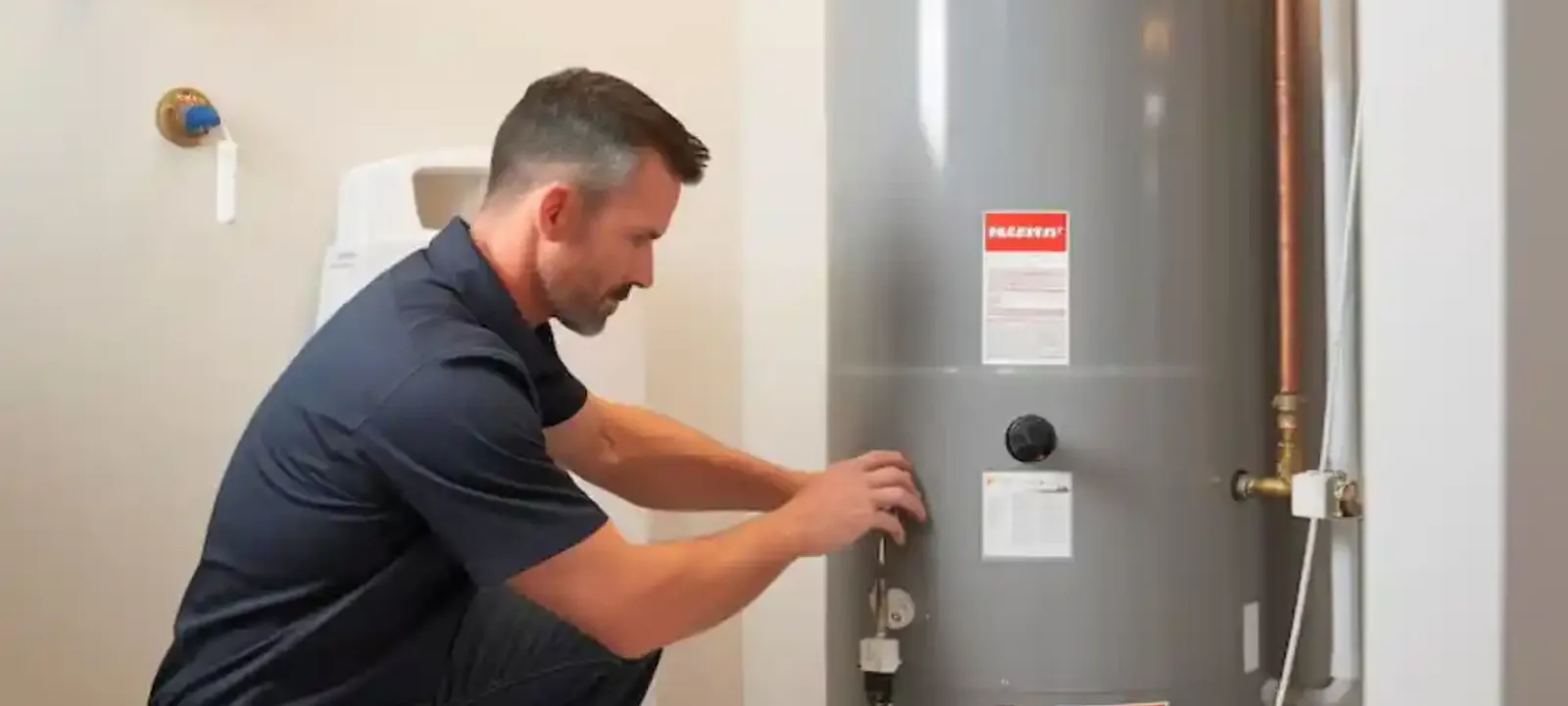
Carbon monoxide forms when fuel burns without enough air. In a plumbing and heating setting, the main sources are gas water heaters, boilers, furnaces and their flues. A blocked or cracked flue lets exhaust back into the living space.
- Soot or scorch marksDark staining around a water heater, boiler or draft hood can mean poor combustion.
- Yellow or orange burner flameA healthy gas flame is mostly blue. A lazy yellow flame needs a service call.
- Rusty or disconnected flue pipeExhaust gases escape when the vent pipe is loose or corroded.
- Pilot lights that keep going outBackdrafting or poor airflow can blow out a pilot.
- Alarm sounds with no causeTreat a CO alarm as real. Leave the house and follow the official guidance for your alarm.
If your water heater is old or the flue looks poor, a water heater repair visit can inspect the venting. A tired tank may be better replaced, as covered on our water heater replacement page.
What to do when a CO alarm goes off
- Get everyone outMove to fresh air outside, including pets. Do not stop to open windows.
- Call for helpCall 911 from outside. Fire departments can measure CO and tell you when it is safe.
- Do not re-enterWait for responders to clear the home.
- Get checked if anyone feels unwellHeadache, dizziness and nausea are symptoms officials list. Follow medical advice and let a doctor decide.
- Have the appliances inspectedA qualified service tech should look at every fuel-burning appliance before you use it again.
We do not diagnose medical conditions here, and we defer to public health guidance on symptoms. Our part is checking the plumbing and water heating equipment once the home is declared safe.
What this means for Manchester Township homes
Census data puts Manchester Township's median home build year at 1979, with roughly 8,800 homes from the 1970s alone. Water heaters and boilers in older houses are often replaced one at a time, so the flue may be older than the appliance. Ask for the vent to be looked at whenever a unit is swapped.
Not every home burns the same fuel. If yours uses propane instead of natural gas, you need a propane-rated detector, and the smell warning still applies. Check your fuel before you shop for any detector.
Hot water here is moderately soft to soft, per the Manchester Township Water Utility reports. That means sediment, not heavy scale, is the main buildup in tanks. A tank with years of sediment burns less efficiently, which is another reason to service old units.
Gas appliance replacements need a permit and inspection through the municipal construction office under New Jersey's Uniform Construction Code. That inspection is a second set of eyes on the vent.
When to call a plumber and when to call 911
- Smell of gas inside or outside: leave and call 911 or the gas utility.
- CO alarm sounding: leave and call 911.
- Water heater pilot out, no smell, no alarm: call us for service.
- Rusty flue or soot near the heater: call us to inspect and replace the piece.
- No hot water after the home is cleared: call us for repair.
Need a water heater or boiler checked after a scare? Call (609) 547-1417 any hour.
Choosing and placing detectors
Install CO alarms on every level and outside each sleeping area, following the maker's instructions. Test them monthly and replace them at the end of the life printed on the device. A dead battery protects no one.
Add a combustible gas detector near gas appliances only if it is rated for your fuel. Mount it at the height the label gives, since natural gas and propane behave differently in a room. A detector supplements, and never replaces, your nose and common sense.
Keep the area around the water heater clear of storage and chemicals. Good airflow around a gas appliance helps it burn cleanly.
Serving nearby towns
We also respond in Toms River and Berkeley Township. The same rule applies there. A CO alarm and a gas detector do different jobs, and a smell of gas always means leaving first.
Frequently asked questions
No. It senses carbon monoxide only. Natural gas needs a combustible gas detector, and the smell of gas should always be treated as an emergency.
No. Propane is a separate gas and needs a propane-rated detector. Check the package label for the gases it covers.
Leave the building right away, avoid switches and flames, and call 911 or your gas utility from outside.
A gas water heater can if it burns poorly or the flue is blocked. Soot, a yellow flame and a loose vent pipe are warning signs.
Look at your appliance labels and your utility bills. Check appliance labels and bills to see whether you burn natural gas, propane or oil, then buy a detector rated for that fuel.
Once the home is cleared, we can inspect the plumbing and water heating equipment. Call (609) 547-1417 to book a visit.